What supports the one-million youth turnout claim?
GOVERNING QUESTION · 20 NOVEMBER 2026
What evidence supports the Youth Strike Coalition claim that one million students and young people mobilised across more than 27 countries on 20 November 2026?
claim
100%
Coalition: one million young people in 27+ countries
PRIMARY CLAIM · COALITION RELEASE
The final coalition release says one million students and young people mobilised across more than 27 countries. It provides no country-by-country turnout table in the release.
No published national breakdown or counting method
DOCUMENT AUDIT · 22 NOVEMBER 2026
The reviewed final release contains no national figures, source notes, counting method, or rule for allocating overlapping all-age demonstrations to the international youth total.
Italy: CGIL claimed more than one million of all generations
ALL-AGE GENERAL STRIKE · AP / CGIL CLAIM
The only million-scale national figure located in contemporaneous reporting was the CGIL union claim that more than one million people of all generations joined Italy’s separate nationwide general strike. Italian student actions coincided with it; no separate national youth-only count was located.
The two totals match; provenance remains unresolved
NUMERICAL MATCH · NOT AN ALLEGATION OF COPYING
Italy’s all-age union estimate and the coalition’s international youth estimate are both one million-plus. This raises a provenance question but does not establish that the coalition copied, repurposed, or misrepresented the Italian number.
The public How to Join directory contained 24 country sections when reviewed, while the final release said more than 27 countries. This is evidence of incomplete or stale public documentation, not proof that 27 countries did not participate.
Activity outside the directory: Greece and Luxembourg
GEOGRAPHIC REACH · PARTIAL DOCUMENTATION
Reporting and allied mobilisation pages identified activity in Greece and Luxembourg outside the 24-section coalition directory. Luxembourg was announced through a broader anti-militarisation mobilisation and is not necessarily a verified 20 November youth event.
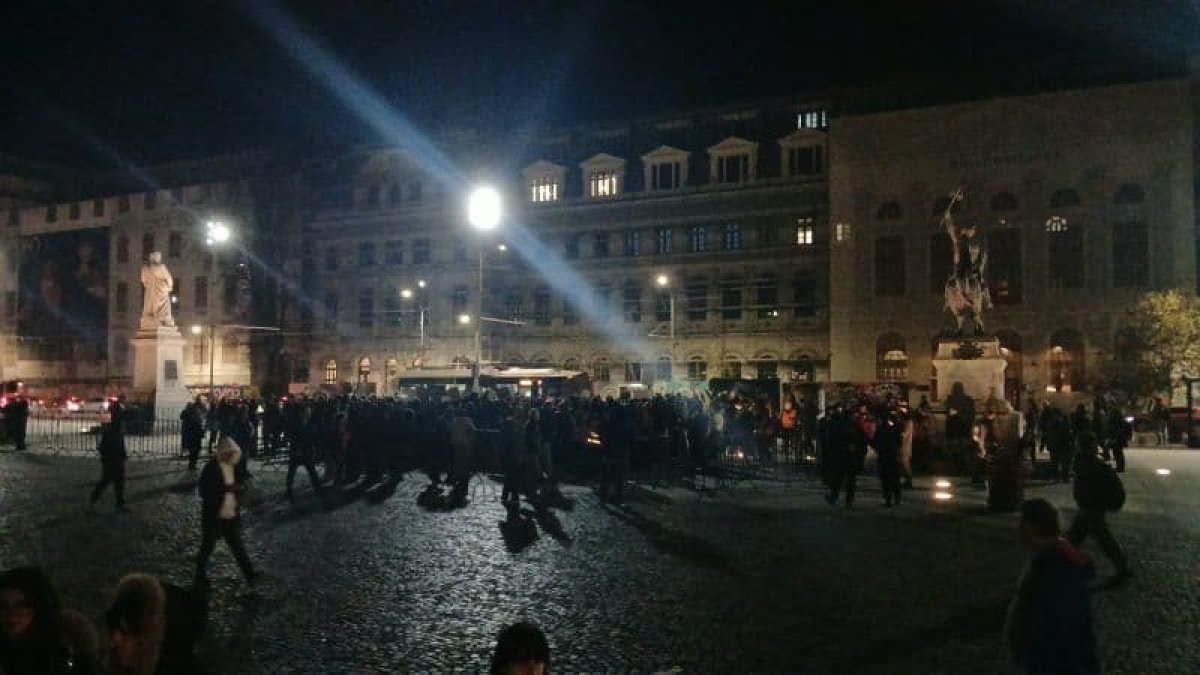
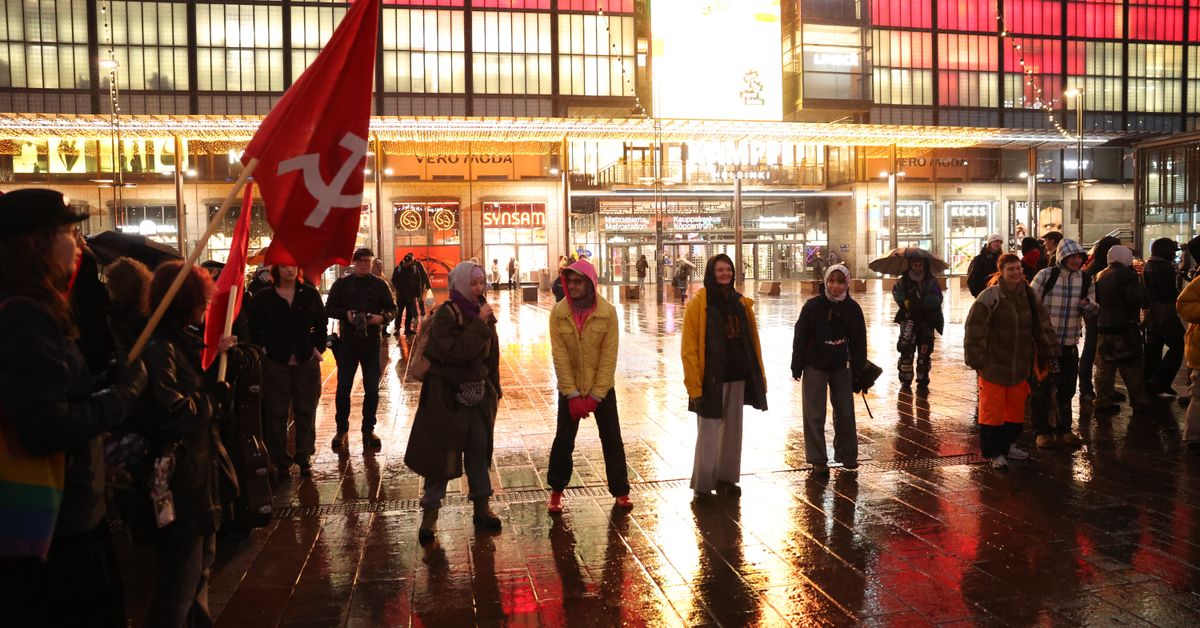
Real demonstrations occurred, but reported scale ranged from thousands in Switzerland and Germany to hundreds in Austria, Sweden, London and Romania; about 50 each in Helsinki and Rovaniemi; and handfuls or cancelled actions in parts of Croatia. Several countries had no located post-event count.
24
country sections in public coalition directory
Reviewed 22 November 2026
Source: Youth Strike Coalition
40,000
Swiss organiser claim
Independent reporting described thousands
Source: SRF
~50 + ~50
Helsinki and Rovaniemi
Public broadcaster estimate
Source: Yle
>1m
Italy all-age general-strike claim
No separate youth-only national count located
Source: CGIL via AP
evidence
95%
Switzerland: thousands; organisers claimed 40,000
MULTI-CITY YOUTH STRIKE · OVERLAP WITH UNIONS
Independent reporting described thousands in the streets across roughly ten cities; organisers claimed 40,000. A reported 25,000-person Lausanne event was jointly organised with unions, so overlap must be resolved before aggregation.
The Guardian reported an early count of about 1,000 in Berlin; later reporting placed Berlin around 4,000, with other cities in the thousands. Registrations and turnout must remain separate and city reports require deduplication.
Austria and London: hundreds, not registered capacity
INDEPENDENT / PARTIAL COUNTS
AP observed several hundred at the Vienna youth rally despite registrations of 1,000 for each of two demonstrations. London reporting described several hundred plus distributed walkouts, with no located national total.
Sweden: hundreds; Finland: about 100 in two counted cities
NATIONAL BROAD COUNT / PUBLIC BROADCASTER COUNTS
Swedish reporting described hundreds nationally. Yle reported about 50 participants in Helsinki and about 50 in Rovaniemi, with actions in four Finnish cities.
Romania: hundreds; Croatia: handfuls and a cancellation
PARTIAL LOCAL COUNTS
Romania reporting described roughly 200–300 in Bucharest, dozens in Timisoara and actions announced in five cities. Croatian reporting described very small local actions and a cancellation in Split; AP verified actions or boycotts without a national crowd total.
France, Spain, Portugal, Belgium, Denmark and Greece had verified activity without a located national total. Norway, Malta and Slovakia had announced actions without a located post-event count. The Netherlands, Poland, Slovenia, Czech Republic, Turkey and Hungary were coalition-listed but lacked independently located post-event counts in this review.
Grouped evidence region0 connected objects
The mobilisation overlapped with Italy’s general strike, Portugal’s public-sector action, continuing French Yellow Vest and student protests, Swiss union-backed demonstrations and broader anti-militarisation activity. Whole crowds cannot be assigned to the youth strike without a disclosed, consistently applied rule.
Grouped evidence region0 connected objects
brief
100%
Counting rules for a reproducible total
POLISCOPE METHOD
Separate announced, observed, organiser-counted, police-counted and independently counted events. Keep registrations separate from attendance. Deduplicate events. Do not import adjacent dates. Mark all-age demonstrations separately. Preserve ranges and competing estimates. A verified event without a count establishes reach, not numeric turnout.
checklist
100%
Right of reply required before publication
OPEN REPORTING TASK
Ask the coalition for the country-by-country figures, counting method and sources; whether Italy’s all-age CGIL number was included; which countries make up 27+; how allied demonstrations were treated; and whether registrations, school absences or online support were counted.
A real cross-border mobilisation occurred. The one-million youth total is not reproducible from the coalition’s published release or the reviewed country evidence because no national breakdown, source note or overlap rule is supplied. The numerical match with Italy’s all-age estimate warrants a provenance question, not an allegation.
A crowd image in the Youth Strike mobilisation carousel asked followers how to mobilise the next day. It documents campaign packaging and reach, not verified attendance on 20 November.
SOCIAL CAMPAIGN VISUAL · SURFACED VIA GRETA THUNBERG’S PROFILE
The Youth Strike carousel used a Gen Z pirate-flag sign as a catchy movement visual and appeared through Greta Thunberg’s Instagram profile. It is evidence of social amplification and movement branding, not a turnout count.
Open the interactive claim map, inspect every evidence card and follow the source receipts at https://poliscope.live/investigate/one-million-youth-strike-turnout-audit. Built and published with Poliscope: https://poliscope.live.
Greta Thunberg came from a prominent Stockholm cultural family: her mother Malena Ernman was an internationally known opera singer and Eurovision performer; her father Svante Thunberg was an actor and producer. Her first school strike began on 20 August 2018, three days before the family climate memoir Scener ur hjärtat was published. Her parents were already giving book interviews as the strike began and acknowledged the timing was sensitive. PR entrepreneur Ingmar Rentzhog had met Ernman months earlier and now says he and a photographer went to the parliament “following a tip about a school strike” — not by chance. A filmmaker also knew of the action in advance through a mutual friend. Rentzhog’s team distributed images and video on day one; Greta later joined his foundation as a youth adviser, and his company cited her eleven times in an investor prospectus without the family’s knowledge. These facts establish a pre-signalled, immediately professionalised launch inside an existing climate/media network. They do not alone prove that her parents created the strike to sell the book; that narrower causal allegation remains unproven.
Switzerland: the largest independently visible youth mobilization
SOURCE PHOTOGRAPH · SRF · 20 NOVEMBER 2026
SRF documented thousands across roughly ten Swiss cities. The photograph establishes substantial street presence, but does not independently verify the organizer’s 40,000 total.
SOURCE PHOTOGRAPH · ZIARUL CEAHLĂUL · 20 NOVEMBER 2026
Local reporting and photographs documented roughly 200–300 participants in Bucharest. The image is event evidence; the reported estimate remains source-attributed.
Finland: a visible action with a very small reported count
SOURCE PHOTOGRAPH · YLE · 20 NOVEMBER 2026
Yle reported about 50 participants in Helsinki and about 50 in Rovaniemi. The photograph helps preserve the distinction between a real event and a large inferred turnout.
Europe’s unrest was real; its scale varied radically
SOURCE PHOTOGRAPH · AL JAZEERA / REUTERS · 21 NOVEMBER 2026
Cross-border reporting documented genuine demonstrations, but the photographs and local counts show radically different event scales. A continental total still requires a country ledger and allocation rules.
Revision 10: centered the source-linked campaign meme and compressed the turnout snapshot so the 76–78% reading view opens on imagery, numbers and the audit trail together.
One Million, No Breakdown · Youth Strike Turnout | Poliscope